What Customers Should Actually Expect
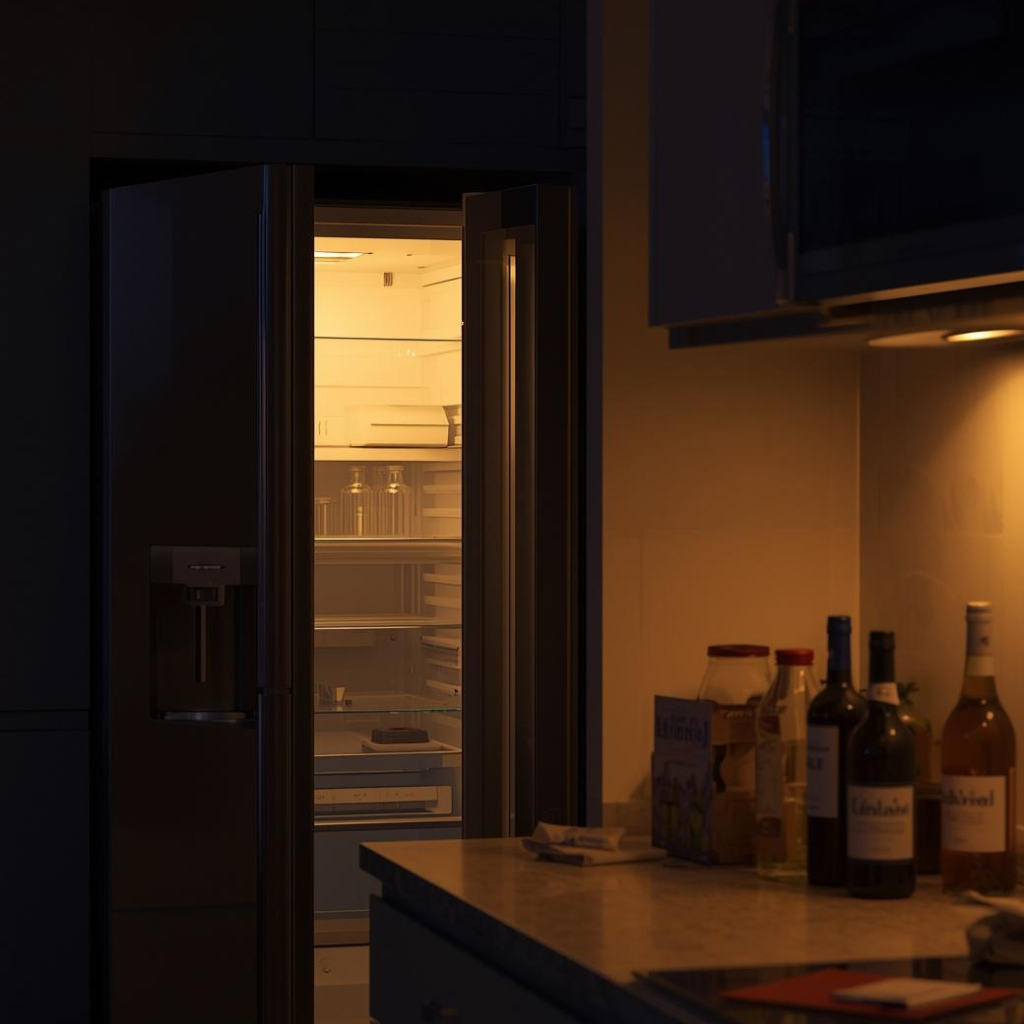
There are two kinds of people at 10:52pm.
The first kind says, “We’re completely fine.”
The second kind has already checked the fridge, counted properly, and stopped trusting that sentence.
If you’ve ever hosted anything in Northern Sydney after dark, you already know which person tends to be right.
That’s exactly why “until midnight” matters. Not because it sounds dramatic. Not because every night needs rescuing. But because there’s a very real gap between a night that’s still going strong and a retail window that has quietly decided it’s done for the evening.
And in that gap, people stop wanting big promises. They want clear ones.
Let’s start with the phrase everyone thinks they understand
“Alcohol delivery until midnight” sounds wonderfully simple.
Almost too simple.
It has that dangerous quality shared by phrases like “five-minute walk” and “there’s definitely enough ice.” Everyone hears it and instantly fills in the blanks with whatever version is most convenient for them.
Some people hear:
I can start thinking about this at 11:58pm.
Some hear:
If the night’s still alive, the service window is spiritually alive too.
And some hear:
This is basically unlimited flexibility with a nice-looking clock attached.
None of those readings are especially useful.
The useful reading is much less glamorous:
there is a real late-night delivery window, and if you understand it properly, it makes the night easier.
That’s the whole value.
“Until midnight” is a promise. It is not a fantasy genre.
A good late-night service should feel reassuring, not magical.
That difference matters because people often judge “until midnight” as if it means the service should become more elastic the later the hour gets. In practice, the opposite is usually true. A service window becomes more valuable late at night precisely because it is defined.
You know there is still an option.
You know the night has not completely run out of runway.
You know you are not stuck with “guess we’re done then” just because the timing slipped.
But a defined window still has shape. It is not a vague mood. It is not a wink. It is not an invitation to start improvising like the laws of time and geography are just gentle suggestions.
That is what customers should actually expect: not chaos, not miracles, just a real option that still exists while the night is still worth supporting.
Northern Sydney makes this more practical, not more abstract
This is where generic late-night writing usually gets a bit lazy.
It starts sounding like every suburb behaves the same way after dark, which is a great sign that whoever wrote it has spent more time with keywords than with actual evenings.
Northern Sydney is not one giant interchangeable block of convenience.
A service that covers selected suburbs properly is more useful than one that talks like it covers everything in theory and then gets strangely vague once the details matter. Your homepage currently does the smarter thing: it names actual Northern Sydney suburbs instead of pretending all late-night delivery conditions are identical across Sydney.
That matters because local expectation is part of the product.
If you’re in Gladesville, Macquarie Park, Ryde, Chatswood, or nearby suburbs, “until midnight” is only meaningful if the service actually understands its zone, works within it properly, and doesn’t treat suburb coverage like an awkward technicality hiding behind a big headline.
What customers usually want is not what they say they want
People say they want speed.
And yes, obviously, speed is nice.
But late at night, what most customers actually want is something slightly different: certainty before the night gets annoying.
That usually means four things:
You want to know whether the service is still live.
You want to know whether your area is actually covered.
You want to know whether the order still makes sense tonight.
And you want all of that without reading twenty-seven layers of fine print like you’re applying for a mortgage.
That is why clarity beats excitement at 11pm.
The best late-night service isn’t the one that sounds the boldest. It’s the one that quietly answers the questions people really have before they’re forced to ask them twice.
Three bad ways to read “until midnight”
1. As permission to leave everything absurdly late
This is the classic one.
People treat midnight like a starting gun for decision-making rather than the outer edge of a service promise. Then, when things get tight, they act shocked that reality remains stubbornly real.
That’s not a flaw in the service. That’s a misunderstanding of the sentence.
“Until midnight” means you still have a late-night option.
It does not mean the universe has agreed to hold the evening open while you debate whether there might be another bottle hiding behind the oat milk.
2. As proof that coverage doesn’t matter
It matters a lot.
Late at night, suburb coverage is not background admin. It is one of the whole game. A service that knows exactly where it can perform well is far more useful than one that tries to sound statewide, citywide, universal, borderless, and generally too beautiful for practical scrutiny.
At 2pm, exaggeration can hide for a while.
At 11pm, exaggeration gets exposed very quickly.
3. As a promise of endless flexibility
People love flexibility right up until it becomes uncertainty with better branding.
A good service should feel clear, not shapeless. You should know what the window is, what the area is, and what kind of expectation is reasonable. That is not less helpful than vague flexibility. It is more helpful.
What a good “until midnight” experience should feel like
Not frantic.
Not theatrical.
Not like everyone is one missing bottle away from a civic emergency.
It should feel calm.
A good until-midnight offer should give customers something very specific: the sense that the night still has support without turning one small gap into a bigger logistical story than it deserves.
That’s especially relevant in Northern Sydney, where the best local delivery experience is rarely about excess. It’s about continuity.
Dinner ran longer.
Friends stayed.
The fridge was more optimistic than accurate.
Nobody wants to leave.
Nobody wants a simple problem to become the main event.
That is the real use case.
Not glamour.
Not grandiosity.
Just preserving the flow of the night without pretending the service is some mythological force of unlimited convenience.
The smartest expectation is the least dramatic one
If you read “alcohol delivery until midnight in Northern Sydney” properly, it’s actually a very strong promise.
It says:
there is still a late-night window,
there is still support after ordinary retail fades,
and there is still a local option built for evenings that don’t wrap up neatly on schedule.
That’s good.
That’s useful.
That’s worth a lot.
But it only stays useful when customers read it as a real operating promise, not as a blank cheque for last-second chaos.
That is the difference between hype and trust.
And after dark, trust is the more valuable product every single time.
What customers should actually expect